

You’ve booked the venue, appointed suppliers and started selling tickets. Then the permit office asks for a risk assessment, SAPS wants clearer crowd controls, and your medical provider needs a site plan showing emergency access. A generic overseas checklist may mention slips, trips and fire, but still miss the South African issues that matter in practice, including attendance triggers, liquor controls, protest disruption and the information needed for a credible safety plan.
A practical Event Risk Assessment Template: What South African Organisers Should Include should do more than list hazards. It should connect each risk to a control, an owner, an escalation point and the permit or statutory requirement behind it. That makes the document useful on event day and credible when a venue, municipality, emergency service, insurer or law-enforcement representative reviews it.
Why South African Event Risk Assessments Need Local Detail
A copied checklist can look polished and still fail the real test. It may cover weather, temporary structures and public liability, but omit the venue capacity, crowd profile, route controls and emergency arrangements requested during local permitting or SAPS coordination.
South African events often involve overlapping safety, health and liquor responsibilities. Officials may need to see the venue, attendance, access routes, medical response, fire controls, alcohol model and evacuation process as one operating picture. A tick-box template can miss how one decision changes another. Liquor service can alter crowd behaviour, a narrow gate can increase density, and a blocked service road can delay medical intervention.
Practical rule: A downloadable PDF is a format, not proof of compliance.
The template should therefore serve two purposes. Internally, it helps the organiser plan the event. Externally, it acts as a permit-ready compliance deliverable, with clear fields for organiser particulars, venue information, expected attendance, spectator profile, incident history, service providers and emergency contacts.
That does not mean turning the document into dense legal text. It means translating legal requirements into practical rows such as:
Expected peak attendance: Record the highest number of people likely to be present at the same time, not only ticket sales.
Safe capacity by zone: State the capacity of the field, grandstand, hall, queue area and any temporary viewing platform.
Emergency access: Identify the route, keep it clear and assign a person to monitor it.
Incident escalation: Define what moves an issue from routine supervision to an incident-management response.
For organisers also preparing a wider event budget, resources such as Event 360 Pty Ltd’s corporate event production budget template and financial planning guide can help connect supplier, production and contingency decisions to the operational plan. The risk document should then show how those choices affect safety.
The rest of this guide turns that approach into fillable fields that create evidence, assign ownership and make it easier to explain why each control fits the event.
South African Legal Triggers and Compliance Documents
Start by identifying which legal and permit frameworks apply. The Safety at Sports and Recreational Events Act 2 of 2010, commonly called SASREA, came into operation in August 2010 and was designed to set and maintain minimum safety and security standards for sports, recreational, religious, cultural, organisational and similar events. It explicitly applies to venues with a spectator capacity of at least 2,000 persons. The Act also requires an organiser to submit an annual event schedule to the National Commissioner at least six months before the start of that schedule. These requirements are set out in the official SASREA document.
SASREA deadline: Submit the annual event schedule to the National Commissioner at least 6 months in advance where SASREA applies.
In practice, organisers should also prepare a JOC, Joint Operations Centre, Safety File as the main compliance pack reviewed by local municipalities, SAPS and other safety stakeholders. This file typically brings together the event risk assessment, venue plans, emergency procedures, medical arrangements, security deployment, contact lists, permits, certificates and supporting annexures in one reviewable submission.
JOC Safety File callout: Your event risk assessment template should feed directly into the JOC Safety File, which is often the primary operational document checked during municipal and SAPS coordination.
The National Health Act regulations create a separate medical-planning lens. They define a mass gathering as more than 1,000 participants simultaneously present, while an event below that threshold still requires a risk assessment if it is considered high risk. Where the profile indicates risk, adequate health and medical services must be provided. The medical provider and organiser must also map the venue, entry and exit points, emergency routes, medical facilities, triage areas, toilets, stalls and parking, as described in the National Health Act mass-gathering regulations.
Municipal event policies can create an earlier practical trigger. Some South African municipal policies require a valid permit for an event involving 50 persons or more in a public place or on public property, or for an event that affects public property or requires a municipal service. The applicable by-law depends on the municipality, venue and event activity, so a corporate launch or small concert may need municipal engagement before SASREA’s larger capacity threshold becomes relevant.
To avoid repeating thresholds throughout the template, keep them in one quick-reference table and then build the rest of the document around the resulting obligations.
| Statute or framework | Crowd threshold | Authority | Template rows added |
|---|---|---|---|
| SASREA | Venue spectator capacity of at least 2,000 persons | National Commissioner and event-safety structures | Event categorisation, safety officer, safety plan, JOC Safety File, venue suitability, crowd controls and submission milestones |
| National Health Act regulations | More than 1,000 participants simultaneously present, with risk assessment also relevant below that level for high-risk events | Health and medical authorities | Medical risk profile, venue map, emergency routes, triage, medical facilities and service arrangements |
| Municipal event policies | Some policies use 50 persons or more in a public place or public property | Relevant municipality | Permit trigger, public-property impact, municipal services, JOC or local event file records, and local submission records |
A risk assessment should sit alongside, not replace, specialist advice on insurance and contractual exposure. Organisers can use this South African event liability, public liability and event cancellation comparison when deciding which separate exposures need attention.
Core Fields Your Event Safety Plan Should Cover
Build the template in the same order that a reviewer or event controller would understand the event. Start with identification, then describe the site, record the operating model, document emergencies and finish with a live risk register.
The first block should capture the event name, organiser, legal entity, responsible contact, venue, GPS coordinates, dates, operating hours and event category. Add expected attendance by total and peak simultaneous presence. Include the appointed Safety Officer where SASREA applies, together with evidence of appointment and contact details.
The venue section needs more than an address. Attach or reference a layout showing entrances, exits, queues, restricted zones, stages, barriers, parking, toilets, water points, medical posts, fire equipment and emergency routes. Record capacity per zone and note adjacent land uses, roads, businesses, residences, transport interchanges or open areas that could affect crowd movement or security.
A useful test: Someone who was not involved in planning should be able to understand the site and find the correct emergency route from the template alone.
The operational block should identify the build, event and break schedules, contractors, suppliers, temporary structures, electrical installations and certification records. Add a row for who checks each structure before opening and what happens if a certificate or inspection is outstanding.
Emergency planning should name assembly points, evacuation routes, the nearest suitable hospital, estimated travel time under expected conditions, and SAPS, fire and emergency medical contacts. Include public-address announcements, accessible evacuation arrangements, lost-child procedures and the person authorised to pause or stop an activity.
| Mandatory safety-plan field | What to capture | Statutory source |
|---|---|---|
| Event risk assessment | Hazards, likelihood, severity, controls, residual rating and owner | SASREA safety-plan requirements |
| Event duration and programme | Opening, closing, performance, build and breakdown times | SASREA safety-plan content |
| Venue, stadium or route suitability | Layout, safe capacity, access, egress and surrounding precinct | SASREA and post-SASREA safety regulations |
| Spectator profile and attendance | Expected numbers, peak presence, age or group profile and ticketing model | SASREA safety-plan content |
| Service providers | Contractors, security, medical, transport and communication responsibilities | SASREA safety-plan content |
| Facilities and utilities | Ablutions, refuse, water, lighting and temporary infrastructure | SASREA safety-plan content |
| Fire and emergency medical measures | Fire prevention, equipment, medical posts, triage and response arrangements | SASREA and National Health Act regulations |
| Access, egress and evacuation | Gate controls, routes, announcements, assembly areas and evacuation procedures | SASREA and National Health Act regulations |
| Risk register | Hazard, cause, consequence, control, residual risk, owner and review trigger | South African event safety standards |
Keep evidence beside each row. That may include a venue plan, inspection record, contractor certificate, permit, contact confirmation or signed method statement. Screening can also form part of supplier and volunteer governance where appropriate. For background-check context, organisers may review resources on background checks and sex-offender registry context for volunteer screening, while still checking South African privacy, employment and safeguarding requirements before using any screening process.
A complete safety file should also explain how controls will be monitored. A security manager may own gate counts, the medical contractor may own response readiness, and the venue may own fire systems. For broader liability considerations, compare the operational information in the template with the requirements discussed in this South African event liability insurance guide.
Security, Liquor and Behavioural Risks to Capture
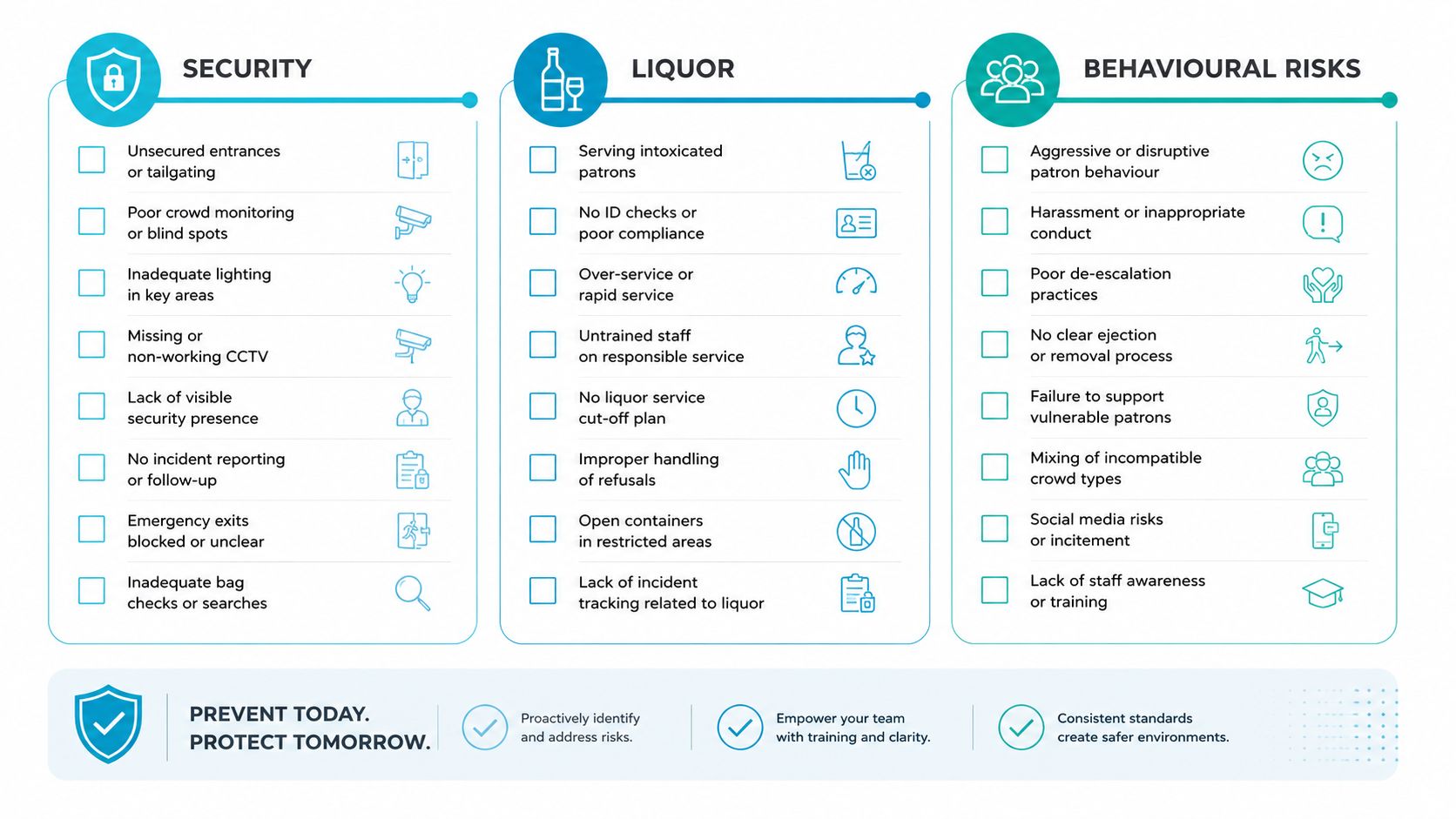
Physical hazards are only part of the picture. High-risk event applications can require event-specific threat analysis, previous safety, security and medical incidents, crime trends, liquor sale and consumption, and rivalry or tension between participants or supporters. A generic “security risk” row is not enough because it does not explain what could happen at this venue, with this audience and under this programme.
Create separate fields for:
Local crime and access threats: Record relevant precinct trends, parking exposure, vehicle break-ins, pedestrian approaches and lighting gaps. Assign the security manager and review the assessment if venue operations or public alerts change.
Participant tension: Note rival supporter groups, protest history, contentious speakers, political or VIP attendance and any issue that could produce conflict. Identify separation, screening, stewarding and liaison controls.
Liquor model: Record the licence or permit position, trading hours, designated consumption areas, proof-of-age process, service points, intoxication response and the person who can suspend service.
Protest disruption: Identify nearby protest activity, possible route blockages, public transport disruption and communication channels for escalation. The plan should specify who monitors SAPS alerts and who contacts the venue, municipality and emergency services.
Incident history: Attach previous reports, complaints, security debriefs and medical summaries. A past incident is not a prediction, but ignoring it weakens the risk rationale.
Liquor controls need event-specific treatment under the applicable provincial or municipal framework, including Western Cape or Gauteng requirements where relevant. The template should capture designated areas, trading-hour limits, service arrangements and the consequences of non-compliance under the applicable licensing regime. Do not describe a risk without recording a control, an owner and a review trigger.
For insurance planning, the event profile should match the information supplied when seeking cover. This South African event liability insurance cover guide is a useful reference point when reviewing declared activities, venue conditions and exclusions.
Crowd, Medical and Operational Planning Numbers
A risk assessment becomes operational when it records measurable controls. Start with the attendance definition. Ticket sales, invitations and venue capacity are not interchangeable, so the template should state total attendance, peak simultaneous attendance, staff and supplier numbers, and the assumptions used to calculate medical, security and facility requirements.
The National Health Act regulations create the medical planning trigger, but a useful template should go further and record the event’s actual operating assumptions. That includes gate throughput, search intensity, emergency-lane width, water points, toilets, queue design, lost-child arrangements and the escalation chain. The purpose is not to force generic numbers into a form. It is to show how the organiser and providers arrived at a workable plan.
Use the following table as a baseline planning guide, not as a substitute for professional medical, venue or authority approval. Final staffing and throughput numbers should still be confirmed by the medical contractor, venue management, JOC process and the applicable authority.
| Trigger or attendance | First aiders required | Ambulance crews | Ingress capacity, people per minute per gate | Toilet ratio |
|---|---|---|---|---|
| Below 1,000 simultaneous participants, assessed as low risk | Minimum 2 first aiders per 1,000 attendees, with at least 2 on site | 1 standby ambulance access arrangement for remote sites or higher-exposure venues, otherwise on-call subject to risk assessment | 82 to 100 people per minute per standard gate where the gate design, ticketing method and search process allow it | Minimum 1 toilet per 75 women and 1 toilet plus 1 urinal per 150 men, subject to venue and municipal rules |
| Below 1,000 simultaneous participants, assessed as high risk | Minimum 4 first aiders per 1,000 attendees | 1 dedicated ambulance crew on site | 60 to 82 people per minute per gate where bag checks, accreditation checks or screening slow throughput | Increase above baseline according to dwell time, alcohol service and event duration |
| More than 1,000 simultaneous participants | Minimum 2 to 4 first aiders per 1,000 attendees, scaled to risk profile and event footprint | 1 dedicated ambulance per 2,000 attendees, with additional response capacity for multi-zone or high-risk events | Calculate gate throughput by actual lane width, screening intensity and queue design, then verify in the crowd-flow plan | Use venue and municipal requirements, then uplift for concerts, liquor service and long-duration events |
| Venue capacity of at least 2,000 persons | Apply medical baseline and add SASREA planning controls | Dedicated ambulance presence strongly indicated, subject to categorisation and JOC review | Ingress and egress rates must align with SAPS, venue and safety plan assumptions | Venue and municipal requirements must be documented in the safety file |
Also define what your escalation levels mean. Stage 1 may be routine management, Stage 2 a coordinated incident response and Stage 3 a major emergency requiring senior command and external agency coordination. The labels can vary, but the trigger, authority and communication method must be clear.
JOC submission reminder: Before event day, check that the crowd plan, medical plan, emergency routes, contact list and latest risk register are all aligned in the JOC Safety File.
How to Quantify Risk in a Defensible Way
Risk ratings become defensible when the organiser can show why likelihood and impact were selected. Use the venue’s own incident logs, previous event debriefs, security reports, medical records and complaints as the first evidence set. Then add relevant local information from SAPS, traffic authorities, municipal event structures and emergency services where it is available and appropriate.
Context matters more than generic comparisons. A Cape Town stadium concert and a Johannesburg township festival may have different access routes, audience profiles, transport patterns, liquor arrangements, political sensitivities and crime exposures. You should not transfer one event’s stewarding or gate assumptions to the other without checking site-specific evidence.
A practical register can ask four questions for every scenario:
What is the event-specific threat? For example, vehicle break-ins near an unlit parking approach, conflict between rival groups or a blocked emergency route.
What evidence supports the rating? Use venue incident records, authority information, previous organiser reports or a documented site inspection.
What control changes the exposure? Name the barrier plan, additional patrol, separate entrance, lighting improvement, traffic marshal or communication protocol.
What triggers review? Examples include a change in attendance, a new performer, liquor approval, adverse weather, protest information or a revised site layout.
A 5,000-attendee Cape Town stadium concert should not be compared with a 20,000-attendee Johannesburg township festival solely by headcount. The larger event may have a greater crowd-management burden, while the stadium event may have a more concentrated entry pattern or different parking risks. The template should record the assumptions and avoid presenting either comparison as a measured incident rate unless the organiser has reliable, comparable records.
Quantified fields help an insurer, municipality and disaster-management team understand the reasoning behind the plan. They also reveal missing information early. A risk score without a source, owner or control is only an opinion.
Finalising and Signing Off the Risk Assessment
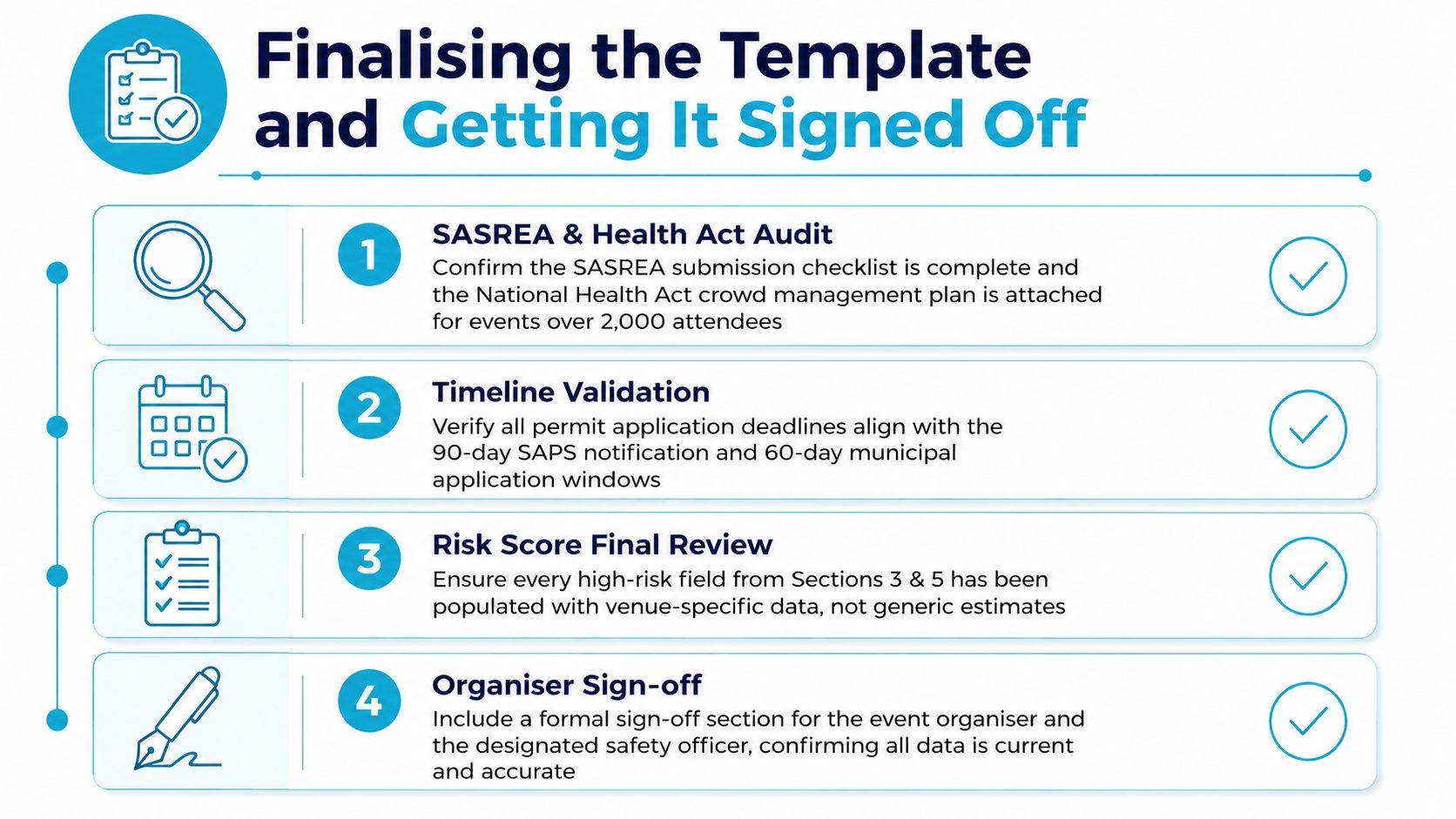
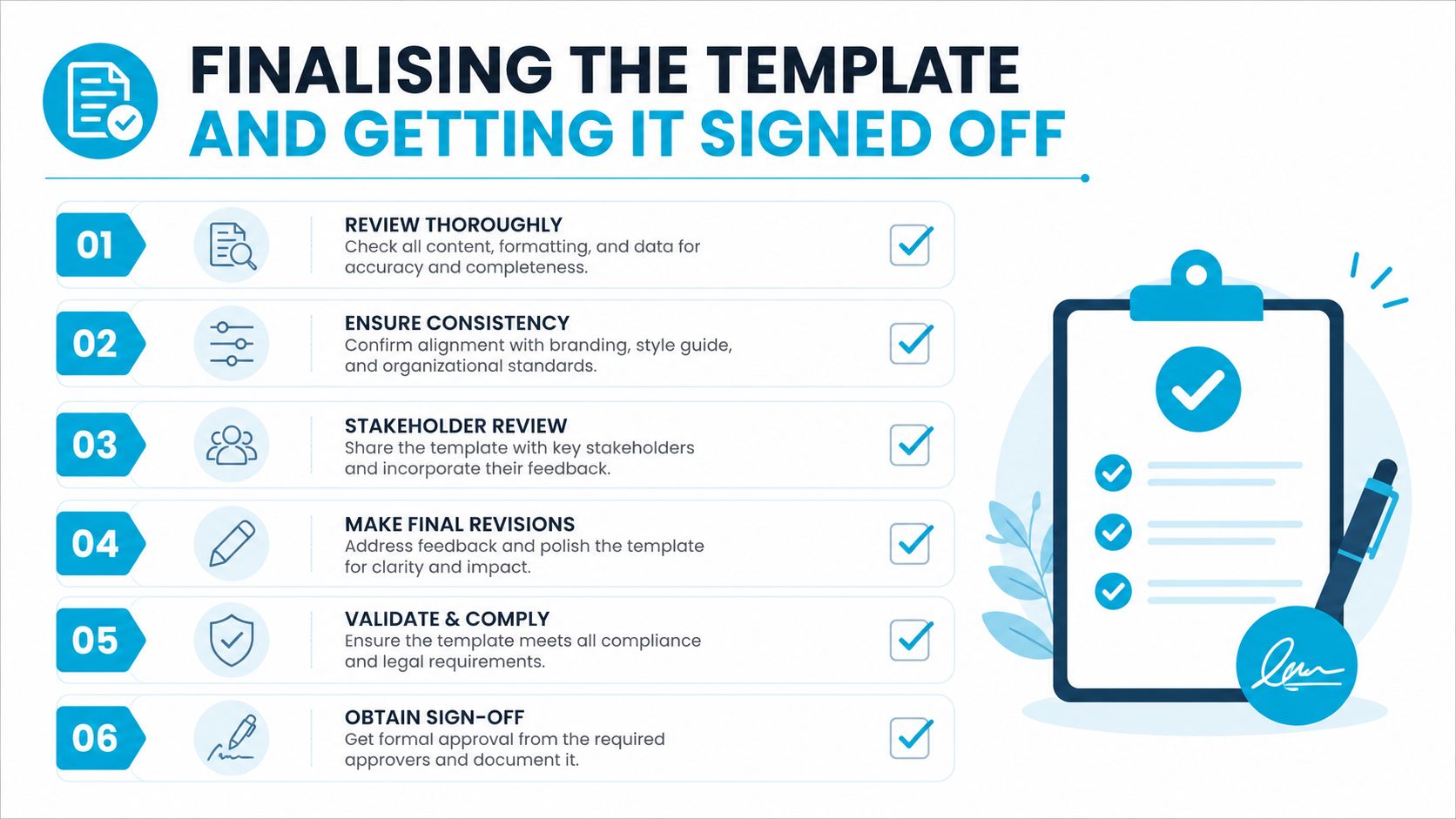
Treat the completed template as a controlled safety document, not a file that disappears into an email thread. Give it a version number, issue date, event date and change log. Keep the current venue plan, risk register, medical proposal, security plan, supplier certificates, permits and contact list together.
Before sign-off, check each row against the actual event:
Apply the correct triggers: Confirm whether SASREA, the National Health Act regulations and municipal permit requirements apply.
Verify the site: Match capacities, gates, routes, emergency access, assembly points and facilities to the latest plan.
Name every owner: A control without an accountable person is not ready for operations.
Test escalation: Ask who receives the first call, who can pause the event and who contacts emergency services.
Collect dated approvals: Obtain sign-off from the organiser, venue, security provider and medical contractor where their responsibilities are included.
Control late changes: Reassess attendance, liquor, performers, structures, weather, protest information and layout changes before opening.
Escalate to a licensed insurance broker or specialist risk adviser where the event exceeds 2,000 attendees, sells liquor, includes rival supporter groups, is near protest activity or sits beside a known high-crime hotspot. Those features can affect both the safety file and the suitability of event liability cover. An adviser can review the declared activity, identify exclusions, check contractual requirements and help align the insurance evidence with the final risk assessment.
Sign-off should confirm accuracy, not just attendance. Each signatory should understand the controls assigned to them, know what must be reported before the event goes live, and confirm that the latest version of the template matches the actual site, programme and operating plan.
Bi-me helps South African event organisers obtain online event liability quotes and manage policy documents through a digital platform, with broker support available for more complex risks. Visit Bi-me to compare cover options against your event activities, venue details and documented risk controls before the event begins.
This is general information only and does not take into account your financial situation, needs, or specific objectives. As with any insurance, the cover will be subject to the terms, conditions, and exclusions contained in the policy wording.