
Starting a small business in South Africa can be exciting, but there is more to it than simply having a good idea and finding your first customer.
You need to understand your market, choose the right business structure, take care of your legal and tax obligations, manage your finances, attract customers and protect the business against risks.
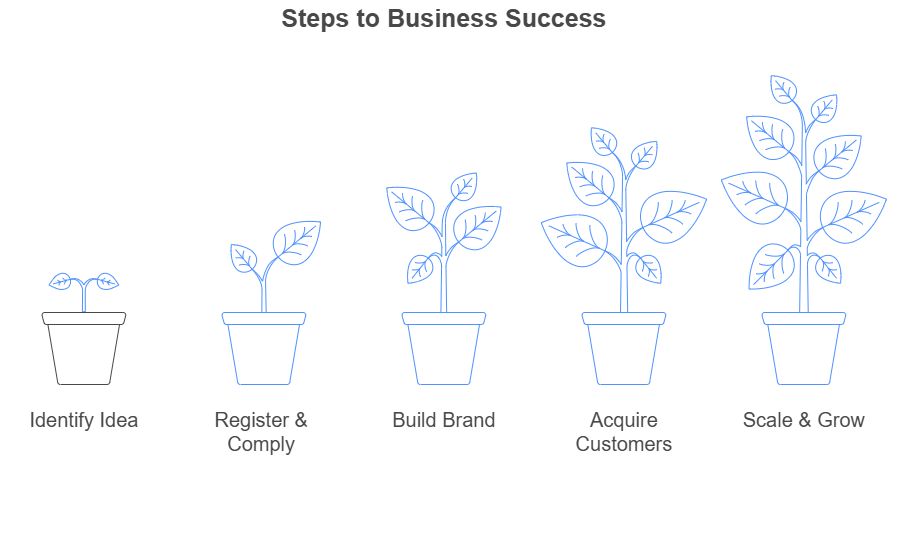
So, what do you actually need to do to start a small business in South Africa?
While every business is different, the process can be broken down into these key steps:
- Choose and validate your business idea
- Choose your business structure
- Register your business and understand your legal obligations
- Set up your business finances
- Build your brand and online presence
- Find your first customers
- Protect your business with the right insurance
- Plan for growth and long-term sustainability
Let’s look at each step in more detail.
1. Choose and Validate Your Business Idea
Every successful business starts with an idea, but a good idea does not automatically make a profitable business.
Before spending significant money on equipment, premises, stock, advertising or professional services, establish whether there is a genuine market for what you want to offer.
Ask yourself:
- What problem does my business solve?
- Who is most likely to buy my product or service?
- What are customers currently paying for similar products or services?
- Who are my competitors?
- What will make my business different?
- How will the business make money?
- What will it cost me to operate the business?
Research your competitors and speak to potential customers. Surveys, interviews, online research and small-scale testing can help you determine whether people are actually willing to pay for your offering.
Start small where possible
You don’t necessarily need to invest heavily before testing your idea.
Depending on the type of business, you could start by:
- Offering your service to a small group of customers
- Selling a limited range of products
- Testing different pricing options
- Creating a basic website or social media presence
- Asking potential customers for feedback
- Taking a small number of initial orders
The goal is to establish whether there is real demand, rather than relying entirely on assumptions.
2. Choose Your Business Structure
One of the first practical decisions you need to make is how your business will be structured.
Common structures for small businesses in South Africa include:
- Sole proprietorship
- Partnership
- Private company (Pty) Ltd
A sole proprietorship can be relatively simple to operate and may suit an individual starting a small business. A private company, on the other hand, creates a separate legal entity and can be appropriate for businesses that intend to grow, employ people, enter contracts or work with larger customers.
The right structure depends on your circumstances, business activities and long-term plans.
Do you have to register a small business?
Not every person who earns income from a small business necessarily needs to register a company with the Companies and Intellectual Property Commission (CIPC).
For example, a person operating as a sole proprietor does not create a separate company simply by trading under their own name.
However, not registering a company does not mean that you have no legal or tax responsibilities.
Your business may still need to comply with applicable SARS requirements, municipal requirements, industry regulations, employment legislation and other laws depending on what you do.
If you decide to establish a company, registration can be completed through CIPC.
Don’t forget your business name
If you trade under a name other than your personal name, think carefully about your branding and whether the name is available and appropriate for your business.
A strong business name can make your company easier to remember, market and differentiate from competitors.
Important: Your business structure and legal obligations should be considered before you start trading at scale. If you’re unsure which structure is appropriate, consider getting professional accounting or legal advice.
📌 Skipping legal registration can lead to fines or business closure, so handle this early!
3. Understand Your Tax and Legal Obligations
Setting up a business also means understanding your tax obligations.
Your responsibilities will depend on factors such as:
- How your business is structured
- How much income the business generates
- Whether you employ staff
- What products or services you provide
- Whether you are required to register for VAT
- Whether industry-specific licences or permits apply
Don’t assume that a small business is automatically exempt from tax or other regulatory requirements.
Check whether your business needs licences or permits
Some businesses have additional requirements depending on their industry and location.
For example, businesses involved in areas such as food, alcohol, transport, construction, healthcare or certain professional services may have additional licences, registrations or compliance requirements.
Check the requirements that apply to your specific type of business before you start trading.
Keep your records from day one
Good record-keeping makes running a business considerably easier.
Keep records of:
- Sales and income
- Business expenses
- Invoices
- Receipts
- Supplier payments
- Bank transactions
- Payroll, where applicable
- Tax-related information
It is much easier to establish good financial habits when the business is small than to try to reconstruct years of financial information later.
4. Set Up Your Business Finances
One of the most important habits you can establish when starting a business is keeping your business finances organised.
Where appropriate, maintain a separate business bank account rather than mixing business transactions with your personal spending.
This makes it easier to:
- Track business income
- Monitor expenses
- Prepare financial reports
- Understand your actual profit
- Keep accurate records
- Prepare for tax obligations
Create a realistic start-up budget
Before launching, calculate what it will actually cost to operate the business.
Consider:
- Equipment
- Stock
- Premises or rent
- Website and software
- Marketing
- Insurance
- Professional fees
- Staff
- Transport
- Utilities
- Banking fees
- Emergency expenses
Don’t only calculate the cost of getting started. Think about how much money the business needs to survive while you build your customer base.
Consider accounting software
Accounting platforms can make it easier to manage invoices, expenses, financial records and reporting.
The right system will depend on the size and complexity of your business, but the important thing is to establish a reliable system from the beginning.
5. Build Your Brand and Online Presence
Once you have established what you are selling and who you are selling to, you need to make it easy for potential customers to find and trust your business.
For many businesses, this means having a professional online presence.
Your website should answer five basic questions
A potential customer should quickly be able to understand:
Who are you?
What do you offer?
Who do you help?
Why should they choose you?
How can they contact or buy from you?
At a minimum, many small businesses will benefit from:
- A clear homepage
- An About page
- Products or Services pages
- Contact information
- Clear calls to action
- Customer reviews or testimonials where appropriate
- Frequently asked questions
- Relevant location information
Your website should also work properly on mobile devices and load quickly.
Don’t rely only on social media
Social media can be an excellent way to reach potential customers, but your business should ideally have a digital presence that you control.
Search engine optimisation (SEO), Google Business Profile, email marketing and useful website content can all help potential customers discover your business.
The goal isn’t simply to have a website or social media account.
The goal is to turn online attention into enquiries, customers and revenue.
💡 Tip: Repeat customers are the lifeline of a business. Offer loyalty programs or referral incentives to keep them engaged.
6. Develop a Strategy to Find Your First Customers
A business cannot survive without customers.
When you’re starting out, your first customers may come from people who already know and trust you.
Consider:
- Friends and professional contacts
- Referrals
- Local networking
- Existing business relationships
- Social media
- Local community groups
- Google searches
- Partnerships with complementary businesses
- Direct outreach
- Paid advertising
Make it easy for people to buy
Once someone shows interest, don’t make the process unnecessarily complicated.
Make sure customers can easily:
- Request a quote
- Contact you
- Book a service
- Purchase a product
- Ask questions
- Understand your pricing
- Find your business location, where applicable
Responding quickly to enquiries can also make a significant difference.
Turn customers into repeat business
Getting your first customer is only the beginning.
Good customer service, reliable communication and delivering what you promised can encourage customers to return and recommend your business to others.
Consider using:
- Referral incentives
- Loyalty programmes
- Follow-up messages
- Email marketing
- Customer reviews
- Repeat-purchase offers
Tip: Your existing customers can become one of your most valuable sources of new business through referrals and recommendations.
🚀 Ready to safeguard your business? Get an instant business insurance quote at Bi-me.
7. Protect Your Business With the Right Insurance
Starting a business means accepting a certain amount of risk.
A customer could claim that your advice caused them financial loss. Someone could be injured because of something connected to your business. Your premises or equipment could be damaged. An unexpected event could interrupt your ability to operate.
The right business insurance can help protect your business from some of these risks.
Professional Indemnity Insurance
If you provide professional advice, services or expertise, a client could claim that your work, advice or professional service caused them financial loss.
Professional Indemnity Insurance can provide cover for certain claims alleging professional negligence, errors or omissions, subject to the terms, conditions and exclusions of the policy.
This can be particularly relevant to professionals such as consultants, designers, engineers, accountants and other service providers.
Public Liability Insurance
If your business interacts with customers, members of the public or other third parties, accidents can happen.
Public Liability Insurance can provide cover for certain claims relating to third-party injury or property damage arising from your business activities, subject to the policy terms.
Business Insurance
Depending on your business and its risks, you may also need other forms of business insurance to protect assets and operations against covered events.
The appropriate cover will depend on factors such as:
- What your business does
- Where you operate
- Whether you have employees
- Whether customers visit your premises
- What equipment or property you own
- Whether you provide professional advice
- The contracts you enter into
There is no single insurance package that is right for every small business.
Get the right protection from the beginning
Insurance is often something new business owners put off until later.
However, a single unexpected claim or loss can have a significant financial impact on a small business.
Protecting your business early can help you build with greater confidence.
Get Your Business Insurance Quote in 10 Minutes
No paperwork. No calls. Just an easier way to get your business insurance started.
The availability and suitability of insurance cover will depend on your circumstances and the specific policy. Cover is subject to the terms, conditions, limits and exclusions contained in the policy wording.
📌 Success doesn’t happen overnight—be patient, stay consistent, and keep learning!
8. Plan for Growth and Long-Term Sustainability
Getting your business started is one achievement. Building a business that can survive and grow is another.
As your revenue increases, regularly review how the business is operating.
Ask yourself:
- Which products or services are most profitable?
- Which customers are most valuable?
- Where are costs increasing?
- Which tasks could be automated?
- Do I need additional staff?
- Do I need better systems?
- Is my pricing still appropriate?
- Are there new opportunities in the market?
- Have my business risks changed?
Reinvest strategically
You may eventually want to reinvest profits into:
- Better equipment
- Marketing
- Technology
- Staff
- Training
- New products or services
- Improved customer experiences
However, growth should be sustainable.
Growing revenue while losing control of your costs, cash flow or risks can create problems rather than solve them.
Review your insurance as your business changes
Your insurance needs can also change as the business grows.
For example, you may:
- Take on employees
- Move into larger premises
- Purchase expensive equipment
- Sign larger contracts
- Start working with bigger clients
- Expand into new services
- Increase your turnover
When your business changes, review whether your existing insurance still provides appropriate protection.
Starting a Small Business in South Africa: Your Checklist
Before you launch, work through this checklist:
☐ Validate your business idea and confirm there is genuine demand.
☐ Identify your target market and understand your competitors.
☐ Choose a suitable business structure, such as a sole proprietorship or private company.
☐ Check your legal and tax obligations and determine which registrations apply to your business.
☐ Find out whether licences or permits are required for your industry or location.
☐ Set up your business finances and establish good record-keeping from day one.
☐ Create a professional online presence so customers can find and trust your business.
☐ Develop a customer acquisition strategy to generate your first sales.
☐ Consider appropriate business insurance based on the risks your business faces.
☐ Review your finances, operations and risks regularly as your business grows.
Final Thoughts
Starting a small business in South Africa doesn’t have to happen all at once.
The most important thing is to build a solid foundation.
Start by validating your idea. Understand your customers. Choose an appropriate business structure. Get your tax and legal obligations in order. Keep your finances organised, build a strong presence online and develop a reliable way of finding customers.
Then, as the business grows, make sure your systems, finances and insurance keep up with it.
A successful business isn’t only about making sales. It’s about building something that can withstand the unexpected and continue growing over time.
If you’re starting a business and want to understand what insurance protection may be appropriate for your risks, Bi-me can help you explore your options and get a business insurance quote online.
*This is general information only and does not take into account your financial situation, needs, or specific objectives. As with any insurance, the cover will be subject to the terms, conditions, and exclusions contained in the policy wording.